
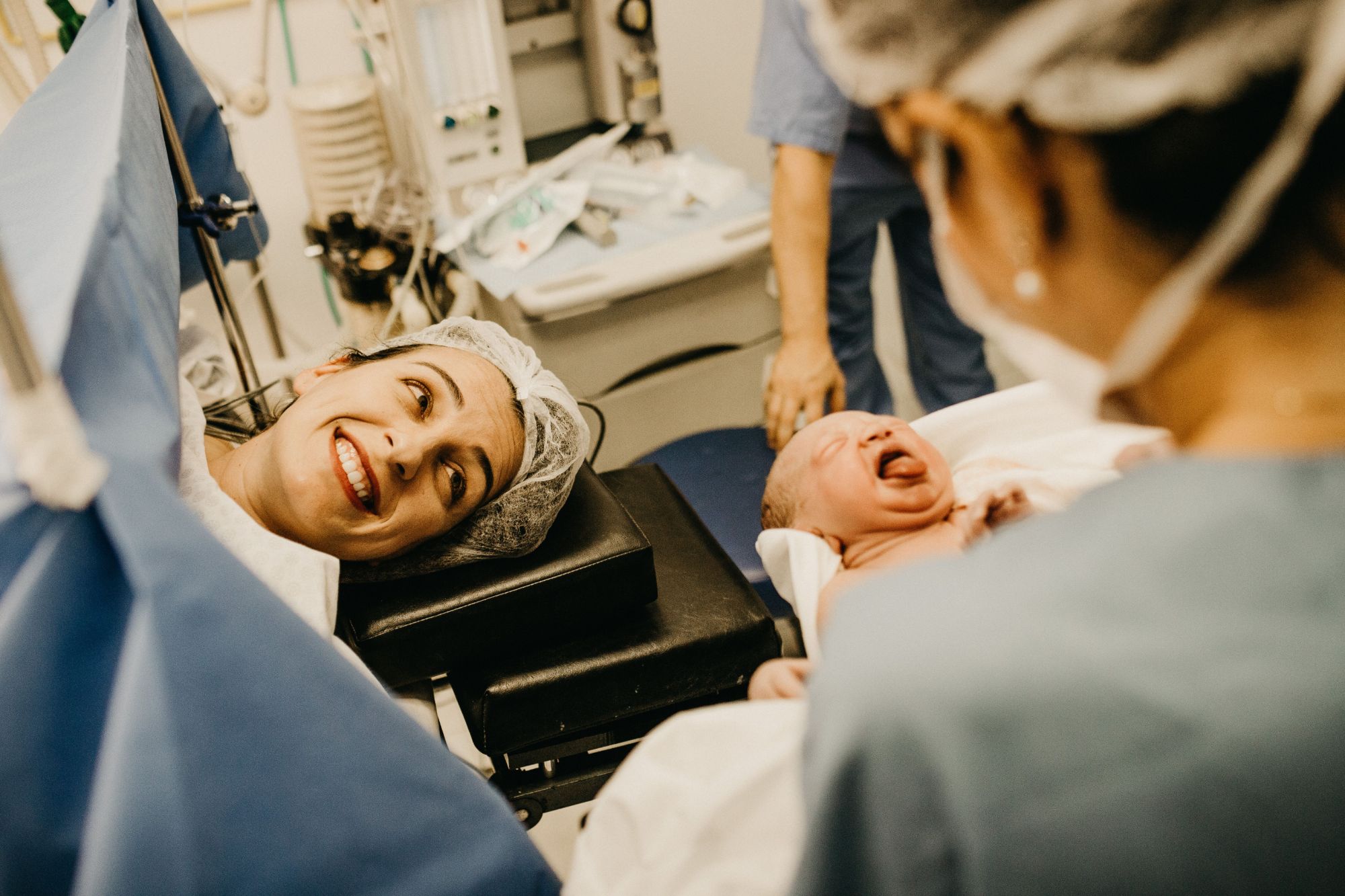
The midwife — officially a registered midwife (diplomirana babica or diplomirani babičar) — is a regulated healthcare profession in Slovenia. It is obtained through a professional higher education degree in midwifery. A midwife cares for the woman during pregnancy, birth and the postnatal period, and for the newborn, within the scope of their competence and in cooperation with a specialist in gynaecology and obstetrics. Midwives work in maternity hospitals, gynaecology clinics at community health centres, private gynaecology practices, health education and teaching. Independent practice requires a professional examination, entry in the register of providers in nursing and midwifery and a valid licence.
A midwife is not a nurse who works in a maternity ward
This is the most common misunderstanding about the profession, so let us clear it up straight away.
In a maternity hospital, people from several professions work alongside the woman and from the outside they look alike. In the healthcare system, however, midwifery is a profession of its own, with its own degree, its own competences and its own responsibility:
- registered midwife: professional higher education in midwifery, focused on pregnancy, birth, the postnatal period, the newborn and women’s reproductive health;
- registered nurse: professional higher education in nursing, covering nursing care in all fields;
- nursing technician: upper secondary vocational education, a member of the nursing team.
All three can work in the same maternity hospital, but they are three different professions. This article is about the midwife.
→ Registered nurse: job description, licence, pay and employment
The midwife at a glance
The profession:
- is regulated,
- is obtained through a professional higher education degree in midwifery,
- requires a professional examination,
- requires entry in the register of providers in nursing and midwifery,
- requires a valid licence, renewed through continuing professional development,
- is practised mainly at the primary and secondary levels of healthcare,
- is one of the professions with automatic recognition of qualifications in the European Union.
The official title exists in both genders: diplomirana babica and diplomirani babičar. In this article we simply write “midwife”.
What does a midwife do?
A midwife’s work follows the woman through the whole period that most people see only as “the birth”: from pregnancy, through labour, to the first weeks with the newborn. The midwife works within the scope of their competence — more independently when pregnancy and birth follow a normal, physiological course, and within a team led by a doctor when complications arise.
In everyday work this most often means:
- monitoring the pregnant woman and her wellbeing within the scope of competence,
- preparing for birth and parenthood, including antenatal classes,
- admitting the woman in labour and monitoring the progress of labour,
- managing a physiological birth together with the obstetric team,
- monitoring the baby during labour,
- caring for the newborn immediately after birth,
- supporting the first contact between mother and baby, and breastfeeding,
- postnatal care of the mother and the newborn,
- health education and advice on care, breastfeeding and recovery after birth,
- working in the gynaecology clinic and in preventive check-ups,
- documenting the work done,
- recognising deviations from the normal course and informing the doctor immediately.
The last point is the core of the profession. Most pregnancies and births are normal, but the situation can change within minutes. The midwife is the one who stays with the woman throughout labour, so they have to be the first to notice that something is changing — and to call for help in time. A steady hand and sound judgement matter as much as knowledge.
Important: the exact scope of competence is set by the professional standard, legislation and the employer’s organisation of work, and these can change. For any specific post, always check what it involves.
What competences does a midwife need?
Professional knowledge
Anatomy and physiology of women, pregnancy and birth, obstetrics, neonatology, care of the mother and newborn, pharmacology, infection prevention, obstetric emergencies and newborn resuscitation.
Judgement under pressure
Recognising when the course of labour is still normal and when it no longer is. Decisions during birth often cannot wait.
Communication and empathy
Giving birth is one of the most important events in the life of a woman and her family. Calm, clear and respectful communication is part of the professional work, not an extra.
Teamwork
The midwife works with the obstetrician, the paediatrician or neonatologist, the anaesthetist, registered nurses and others. When something goes wrong, the coordination of the team is decisive.
Accuracy
In monitoring labour, in measurements and in documentation. The record of labour is both a professional and a legal document.
Stamina
Births do not follow a timetable. Shift work, night work, long hours on your feet and emotionally demanding situations are part of the profession.
Where can a midwife work?
Maternity hospitals
The labour ward, the antenatal ward, the postnatal ward, the newborn unit and the maternity outpatient clinics. This is where most midwives work.
Community health centres
Gynaecology clinics and women’s health clinics at the primary level: preventive check-ups, monitoring of pregnant women, health education and antenatal classes.
Private providers
Private gynaecology practices and specialist centres.
Reproductive health
Clinics and departments dealing with reproductive health, family planning and fertility treatment.
Health education and teaching
Antenatal classes, health education programmes, mentoring midwifery students and teaching.
→ Registered midwife: current vacancies
How do you become a midwife?
- Secondary education completed with the general or vocational matura that meets the admission requirements.
- Enrolment in the first-cycle professional higher education programme in Midwifery. In Slovenia it is offered by the Faculty of Health Sciences of the University of Ljubljana.
- Studies with extensive clinical training in maternity hospitals and other healthcare institutions.
- The degree and the title diplomirana babica or diplomirani babičar (registered midwife).
- The prescribed induction period and the professional examination.
- Entry in the register of providers in nursing and midwifery.
- A licence, renewed on the basis of continuing professional development.
After graduating, further study at the second cycle is also possible.
Important: admission requirements, the scope of the programme and the conditions for practising the profession can change. Before deciding, check the current information from the faculty and the competent institutions.
Midwife or registered nurse?
| Registered midwife | Registered nurse |
|---|---|
| professional higher education in midwifery | professional higher education in nursing |
| pregnancy, birth, postnatal period, newborn | nursing care in all fields |
| works mainly in obstetrics and gynaecology | works in hospitals, health centres, care homes and elsewhere |
| professional exam, register and licence | professional exam, register and licence |
| automatic recognition of qualifications in the EU | automatic recognition of qualifications in the EU |
Both professions require a higher education degree and both require a licence. The difference lies in the focus: the registered nurse is prepared for nursing care in all fields, the midwife for pregnancy, birth and the postnatal period. In a maternity hospital they work side by side.
How much does a midwife earn?
In the public healthcare sector, registered midwife posts fall under the public sector pay system, among healthcare workers in pay group E. The specific pay grade depends on the post — work in the labour ward is valued differently from work in an outpatient clinic.
Slovenia introduced a new pay system on 1 January 2025, and the entitlements under it are being phased in gradually; the government states that the reform is being implemented between 2025 and 2028. A pay grade is therefore not the same as the amount on your bank account.
The final amount also depends on:
- the length-of-service allowance,
- allowances for shift, night and holiday work,
- allowances for special working conditions,
- performance pay,
- promotions,
- overtime and on-call duty.
For midwives the allowances matter, because the labour ward works day and night, every day of the year.
In the private sector there is no single national pay scale; pay depends on the employer, the scope of work and experience.
You will not find a single figure for “a midwife’s salary” in this article. The difference between a midwife starting out in an outpatient clinic and an experienced midwife in the labour ward with night work and long service is too large to be fairly reduced to one number. For any specific advert, always check the post and the organisation of work.
Who is the profession suited to?
The profession may suit someone who:
- is interested in pregnancy, birth and women’s health,
- stays calm when things change quickly,
- can be with a person at one of the most vulnerable moments of their life,
- is accurate and reliable,
- can work in a team and communicate clearly under pressure,
- can handle shift and night work,
- is prepared to keep learning.
How demanding is the work?
To be honest, it is demanding:
- shift work, night shifts, weekends and public holidays,
- an unpredictable rhythm — births are not scheduled,
- great responsibility for two lives at once,
- emergencies in which minutes decide,
- emotionally difficult situations, including loss,
- continuing professional development to keep the licence.
On the other hand, there are few professions in which you are so directly present when a new life begins. That is the most common reason midwives stay in the profession.
The future of the profession
The profession does not depend only on the number of births
A midwife does not work only at births. Monitoring pregnancy, the postnatal period, breastfeeding support, reproductive health, prevention and health education remain necessary regardless of how many children are born in any given year.
More demanding pregnancies
The average age of women giving birth in Slovenia has risen over recent decades. Pregnancies later in life more often need closer monitoring — which means more professional work per pregnant woman, not less.
Working abroad
Midwifery is one of the professions for which automatic recognition of professional qualifications applies in the European Union. A Slovenian midwifery degree is therefore also usable in other member states — subject to the language and administrative requirements of each country.
Digitalisation and artificial intelligence
Part of the documentation, data monitoring and scheduling will be automated, and digital skills will become more important. The part of the profession that happens beside the woman in labour — presence, judgement, reassurance, helping hands — is something technology will not replace.
Career opportunities
- work in the labour ward, the antenatal ward or the postnatal ward,
- outpatient and preventive work at the primary level,
- antenatal classes and health education,
- breastfeeding counselling,
- reproductive health,
- leading a midwifery service or team,
- mentoring students and teaching,
- second-cycle studies and research,
- working abroad.
Where to look for a job?
It makes sense to follow maternity hospitals, general hospitals with an obstetrics and gynaecology department, community health centres and private gynaecology practices.
Employers do not always use the same title in their adverts, so search using several terms:
- registered midwife,
- midwife,
- midwifery,
- labour ward,
- diplomirana babica (the Slovenian title).
It also makes sense to search by location — for example Ljubljana, Maribor, Celje or Koper.
What to check before accepting a job?
- the type of post: labour ward, ward or outpatient clinic,
- the organisation of shifts, night work and on-call duty,
- the number of midwives per shift relative to the number of births,
- the induction period and mentoring,
- the make-up of the obstetric team and how available the doctor is,
- allowances and how overtime is paid,
- opportunities for training and licence renewal.
For a midwife at the start of their career, the most important question is about mentoring: whether they will spend the first months in the labour ward alongside someone experienced.
Frequently asked questions about the midwife profession
Are a midwife and a nurse the same profession?
No. A registered midwife and a registered nurse have different degrees and a different focus. The midwife focuses on pregnancy, birth, the postnatal period and the newborn; the nurse on nursing care in all fields.
What education is required?
The first-cycle professional higher education programme in Midwifery, followed by the prescribed induction period, the professional examination, entry in the register and a licence.
Is the profession regulated?
Yes. The registered midwife is listed among the regulated healthcare professions under the Ministry of Health.
Does a midwife need a licence?
Yes. A midwife must be entered in the register of providers in nursing and midwifery and hold a valid licence, which is renewed on the basis of continuing professional development.
Can a man become a midwife?
Yes. The official title for a man is diplomirani babičar. The conditions for practising the profession are the same.
How much does a midwife earn?
Pay depends on the sector, the post, length of service, allowances and the organisation of shifts. In the public sector the posts fall under pay group E, and the new pay system is being phased in gradually until 2028.
Can a midwife work abroad?
Yes. Midwifery is one of the professions with automatic recognition of qualifications in the European Union. Individual countries may require language skills and entry in their own register.
Who is the profession suited to?
People who are interested in the health of women and newborns, stay calm in unpredictable situations, are accurate, can work in a team and are prepared for shift work.
Conclusion
The midwife is the profession that accompanies a woman through pregnancy, birth and the first weeks with her baby. It is not a nurse who happens to work in a maternity hospital, but a regulated profession of its own, with its own degree, its own licence and its own responsibility.
It is demanding, unpredictable and shift-based. It is also one of the few professions in which you are present when a new life begins — and a degree that is recognised across the European Union.
The need for midwives is not tied only to the number of births: monitoring pregnancy, postnatal care and women’s health are here to stay.
REGISTERED MIDWIFE JOBS (see current vacancies for registered midwives)
ARE YOU HIRING A REGISTERED MIDWIFE? (see the packages for posting a job advert)
What is a BOOST advert? Read more …
All healthcare and pharmacy professions in one place
Have you found an error in this description, or does it need updating? Please send corrections to: podpora@zdravstvena.info
Official and professional sources
- SPOT – regulated healthcare professions under the Ministry of Health: conditions, professional examination, register and licence.
- Ministry of Health – Healthcare Workforce Division.
- Nurses and Midwives Association of Slovenia (Zbornica – Zveza): register and licences.
- Faculty of Health Sciences, University of Ljubljana – Midwifery study programme.
- Directive 2005/36/EC on the recognition of professional qualifications.
- GOV.SI – the public sector pay system and its gradual introduction between 2025 and 2028.